Zack Kass Did Not Give an AI Talk. He Gave a Human One.
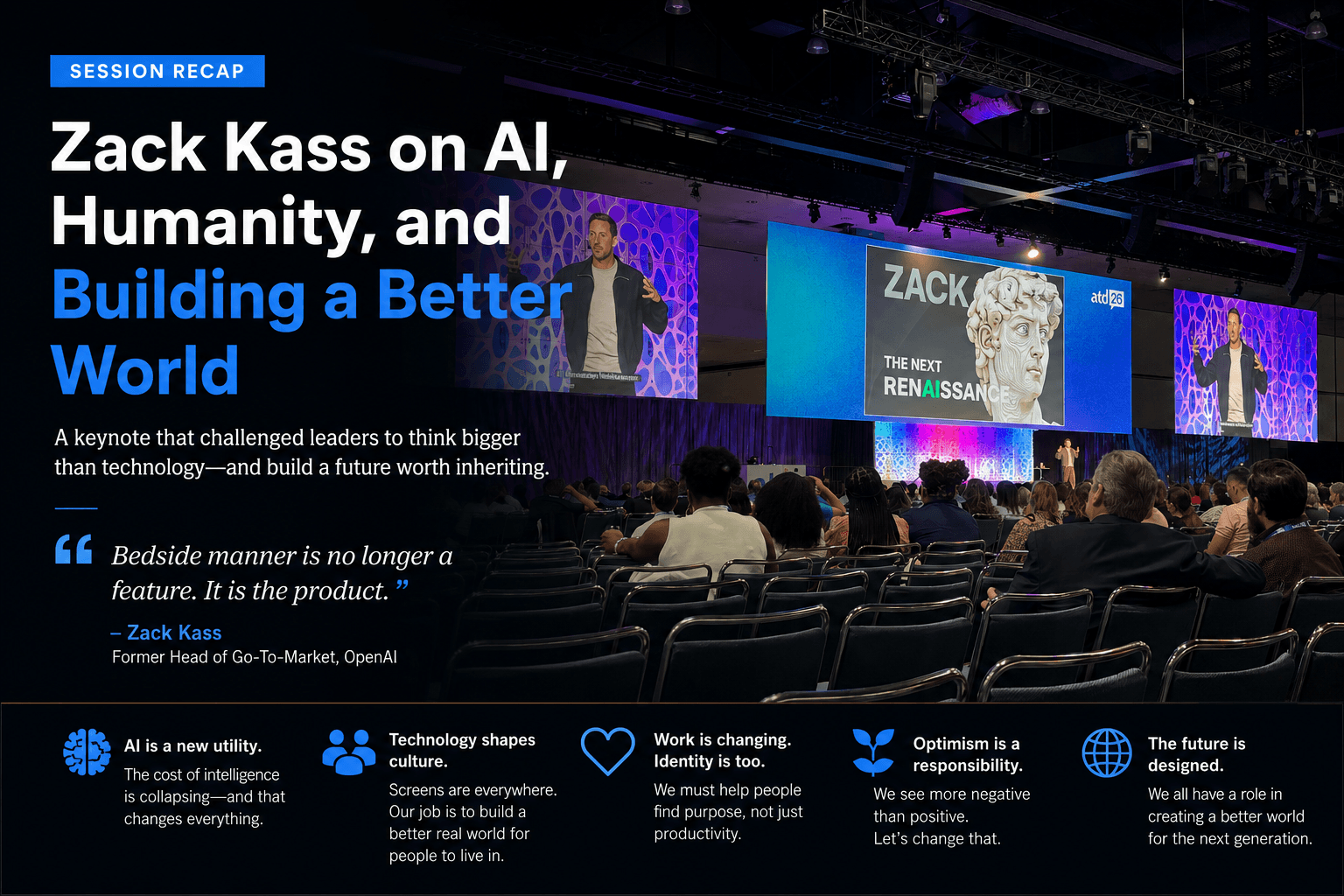
I walked into Zack Kass's session expecting another AI talk. I walked out thinking about people.
The technology was there, of course: models, acceleration curves, practical implications. But the center of the session was not machine capability. It was human consequence.
The real question was not "What can AI do?" It was "What kind of world are we building with it?"
Beyond Efficiency
Zack challenged the room to think beyond productivity gains. Yes, efficiency matters. But if that is the only goal, we miss the bigger opportunity: expanding human potential.
Better access to knowledge. Faster problem solving. More personalized support for learning. These are not just technical wins. They are social and human wins if we design for them intentionally.
Identity and Work
One of the strongest moments was his framing of identity. For many people, work is more than a paycheck. It is meaning, competence, and belonging. So fear of AI is not only fear of automation. It is fear of becoming less relevant.
That is where L&D has a bigger role than content production. Our work is helping people build agency: critical thinking, adaptability, judgment, and confidence in ambiguity.
"Bedside manner is no longer a feature. It is the product."
That line landed because it applies far beyond medicine. As AI handles more of the production layer, human connection becomes the differentiator.
Intentional Optimism
Curiosity, empathy, courage, and judgment are not soft skills. They are core infrastructure.
Zack's throughline was intentional optimism. Not blind faith. Not tech worship. Intentional optimism means believing we still have agency in shaping what comes next, and then acting like that belief is true.
That felt like the right closing note for ATD26: the future is not inevitable. It is designed. And rooms full of learning professionals are exactly where that design work should happen.